In Tajikistan, a telemedicine pilot project to improve access to healthcare in remote rural areas

  • Category
    Articles
  • Published on
    31 August 2026

From February to May 2026, a telemedicine pilot project was deployed in five rural health centers in the Asht district of Tajikistan. Funded by the French government, through the Embassy of France in Tajikistan, and complemented by funding from Sanofi GHU to integrate a dedicated diabetes component, the project helped bring isolated patients closer to general practitioners and specialists at the Asht Regional Health Center.

Reducing distances to improve access to healthcare

In some rural areas of Tajikistan, geographical remoteness, limited infrastructure and travel conditions can pose significant barriers to access to healthcare, particularly to specialist consultations.

To address this challenge, the French government, through the Embassy of France in Tajikistan, funded the implementation of a teleconsultation service pilot entrusted to C3Medical Consulting.

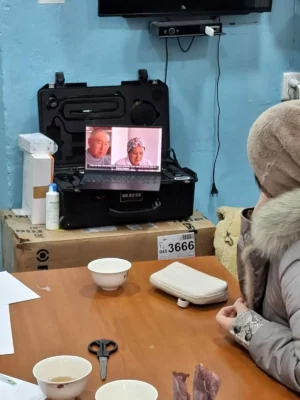
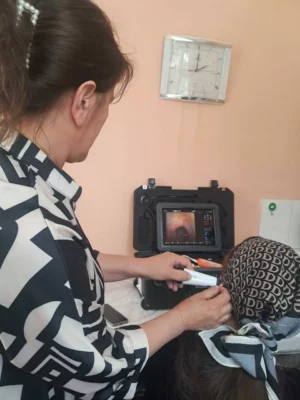
The system was based on a mobile telemedicine suitcase equipped with connected medical devices, enabling doctors to conduct a genuine clinical consultation remotely: stethoscope, otoscope, camera, dermatoscope, ECG, ultrasound device, and point-of-care testing devices.

For four months, the suitcase was circulated according to a schedule established with the local teams between five health centers, enabling patients to benefit from remote consultations with doctors from the Asht Regional Health Center, without having to travel long distances.

A dedicated component for diabetes screening and monitoring

Funding from Sanofi GHU complemented the system with a component specifically dedicated to diabetes.

The suitcase was equipped with a glycated hemoglobin (HbA1c) analyzer and a blood glucose meter, enabling local teams to perform measurements directly in the field. Endocrinology consultations were also integrated into the program to facilitate access to specialist expertise.

At the same time, an information and awareness-raising program on screening for non-communicable diseases was rolled out across the district, with a particular focus on diabetes.

This approach made it possible to combine screening, referral, specialist consultation and follow-up, following a care pathway designed to bring healthcare as close as possible to local populations.
Results confirming the potential of the model

The active clinical phase of the project took place from February 24 to May 29, 2026, with 42 operational days.

In total:

  • 372 teleconsultations were safely conducted, representing an average of 9 teleconsultations per working day;
  • 800 individual diabetes screening tests were performed;
  • 27 endocrinology consultations were conducted;
  • patients benefited from consultations in cardiology, endocrinology, neurology, ENT, urology and general medicine;
  • telemedicine made it possible to cover 87% of consultation needs requiring the use of the available medical devices.

Patient feedback was also particularly encouraging. A survey conducted among a sample representing 10% of teleconsultations showed 100% acceptance of the service among respondents. In addition, 100% of respondents stated that they had received a consultation more quickly thanks to the system.

These results show that, even in a rural, mountainous and isolated setting, telemedicine can provide a concrete means of reducing delays and the constraints associated with distance, while facilitating access to specialized medical expertise.

A project also based on skills transfer

Beyond the technological deployment, the project was designed to promote the sustainable adoption of the solution by local teams.

Doctors and nurses were trained to use the suitcase and its various medical devices. A dedicated nurse was responsible for transporting the equipment between health centers, welcoming patients and handling the instruments during remote consultations.

The teams also benefited from a continuing education platform and training materials in Russian. Remote support was provided throughout the project to answer operational questions and assist the teams in their day-to-day use of the solution.

This skills-transfer component is an essential part of the project: the objective was not simply to introduce a new technology, but to contribute to its integration into the practices of the local healthcare system.

The project also demonstrated the importance of operational agility in isolated environments. When several health centers faced Internet access difficulties during the winter, a satellite connectivity solution was notably implemented to enable teleconsultations to resume rapidly.

A pilot paving the way for scaling up

The pilot project aimed to demonstrate the impact of telemedicine on access to healthcare in remote rural areas of Tajikistan. The results achieved and the very positive reception of the solution among patients and healthcare professionals now provide a solid basis for considering the next steps.

The pilot has now been completed, but the ambition continues: to develop and expand this service so that more isolated populations in Tajikistan can benefit from improved access to primary and specialist healthcare.

This first experience confirms the potential of a model combining technology, medical expertise, local team training and operational support, in pursuit of a common goal: bringing healthcare closer to the populations who are furthest from it.

The success of this project relies on the coordinated mobilization of institutional, financial, medical and technical partners.

We would like to thank the French government, the Embassy of France in Tajikistan, Sanofi GHU, the Asht Regional Health Center, local healthcare professionals, and all the technical and medical partners who contributed to the implementation and success of this pilot.

Articles

In Tajikistan, a telemedicine pilot project to improve access to healthcare in remote rural areas

We're in the news

From Dermoscopy to Ultrasound: How Telemedicine Acts as a ‘Guide’ to Specialized Professionals

Articles

Why the human factor is key in healthcare projects